
SUMMARY
- Airbags are part of a larger Supplemental Restraint System (SRS) that can include sensors, control modules, seat belt pretensioners, wiring, and occupant-detection components.
- Airbags do not need to deploy for a collision to justify checking the restraint system according to vehicle-specific manufacturer procedures.
- A new or persistent airbag warning light after an accident should be professionally diagnosed rather than ignored.
- Deployed airbags cannot be reused and must be replaced with appropriate components.
- Repair requirements vary by vehicle, so technicians should consult OEM procedures when determining which SRS components require inspection or replacement.
- A complete collision repair should consider safety-related systems in addition to visible body and paint damage.
After a collision, it’s easy to focus on what you can see: a crushed bumper, dented fender, broken headlight, or damaged hood. However, some of the most important post-accident checks involve components that aren’t immediately visible.
The airbag system is one example.
Modern airbags operate as part of an interconnected Supplemental Restraint System. Depending on the vehicle, that system may involve crash sensors, electronic control modules, seat belt pretensioners, occupant-detection equipment, wiring, and multiple airbags positioned throughout the passenger compartment.
For drivers in Lincoln, NE, understanding why these components may require attention after an accident can help explain why professional collision repair extends beyond exterior appearance. Wenzl’s Collision Center follows OEM repair procedures and I-CAR standards when restoring collision-damaged vehicles at its Lincoln facility.
Why Should the Airbag System Be Checked After an Accident?
An airbag system is designed to respond to specific crash conditions rather than every impact.
NHTSA explains that whether an airbag deploys depends on factors including:
- Crash severity
- Direction of impact
- Vehicle airbag-system design
- Crash sensor locations
- Occupant conditions
This means the absence of airbag deployment does not, by itself, tell you everything about the condition of the restraint system.
A post-collision assessment may need to consider:
- Airbag modules
- Impact sensors
- Seat belt pretensioners
- Wiring and connectors
- Control modules
- Mounting points
- Occupant-detection components
The exact inspection requirements vary by make, model, year, impact, and manufacturer procedures.
The National Highway Traffic Safety Administration’s airbag safety guidance explains how airbags function and why they are intended to work together with seat belts as supplemental occupant protection.
Does the Airbag System Need Inspection If the Airbags Didn’t Deploy?
Potentially, yes.
One common misconception is that no deployment automatically means the entire airbag system was unaffected. Airbags are not intended to activate during every accident, and different vehicles use different strategies to determine when deployment is appropriate.
A collision can involve areas containing sensors, wiring, seat belt components, or restraint-system mounting points without necessarily triggering an airbag.
Technicians therefore need to follow the manufacturer’s procedures for the specific vehicle rather than using deployment alone as the deciding factor.
OEM procedures may require inspection of certain components based on:
- Collision location
- Impact severity
- Airbag deployment
- Seat belt pretensioner activation
- Diagnostic trouble codes
- Physical damage
I-CAR’s OEM restraint-system information demonstrates how manufacturer procedures can call for inspection of items such as airbag mounting hardware, wiring, sensors, seat belt components, and related areas after particular collision events.
What Happens to an Airbag After It Deploys?
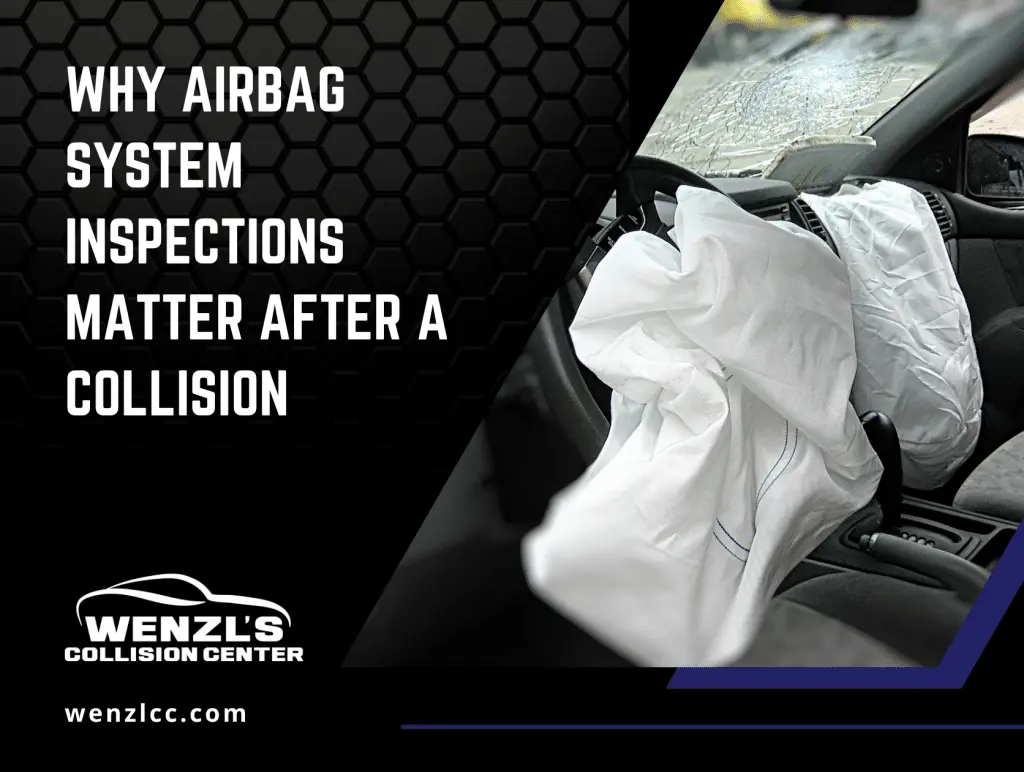
A deployed airbag cannot simply be folded back into position and reused.
NHTSA states that airbags can deploy only once and that deployed airbags should be replaced after a crash before the vehicle returns to service.
Depending on the vehicle and collision, technicians may also need to inspect or address related components such as:
- Airbag modules
- Seat belt pretensioners
- Impact sensors
- Control modules
- Wiring
- Steering-wheel components
- Dashboard components
- Interior trim
The required operations aren’t identical for every vehicle. This is why OEM repair information is essential when determining which components require inspection, replacement, programming, or other procedures following deployment.
Professional collision repair should account for these vehicle-specific safety requirements alongside structural and exterior repairs.
What Does the Airbag Warning Light Mean After a Collision?
If the airbag or SRS warning light remains illuminated after an accident, don’t assume it will eventually reset itself.
The warning indicator can signal that the vehicle has detected a condition requiring attention within the restraint system.
Depending on the vehicle, diagnostic evaluation may identify issues involving:
- Airbag circuits
- Sensors
- Seat belt pretensioners
- Electrical connections
- Control modules
- Occupant-detection equipment
A warning light does not tell the driver exactly which component is responsible. Professional diagnostic equipment and manufacturer repair information are needed to determine what the stored information means and what corrective procedures are appropriate.
NHTSA has emphasized the importance of a properly functioning airbag readiness indicator because it alerts occupants when a malfunction may exist within the system.
Are Seat Belts Part of the Post-Collision Airbag Inspection?
Seat belts and airbags are separate components, but they work together as part of the vehicle’s occupant-restraint strategy.
Modern seat belt assemblies may include pretensioners designed to tighten the belt during certain collisions. Depending on vehicle design and crash conditions, a pretensioner may activate as part of the restraint-system response.
Post-collision procedures can therefore involve checking:
- Seat belt operation
- Retractors
- Buckles
- Pretensioners
- Anchor points
- Mounting hardware
- Related electrical connections
This is important because a vehicle’s restraint system should be considered as a coordinated system rather than treating the deployed airbag as the only safety-related component affected by an accident.
NHTSA describes airbags as supplemental protection intended to operate alongside seat belts rather than replace them.
Can Airbag Sensors Be Damaged During a Collision?
Depending on their location and the type of impact, sensors and related components can require inspection after a collision.
Modern vehicles may use multiple sensors to provide information to restraint-system control modules. Their locations and designs vary considerably between manufacturers.
Collision damage can also affect surrounding areas such as:
- Sensor mounting locations
- Wiring harnesses
- Electrical connectors
- Structural components
- Body panels near sensor locations
This is one reason technicians should avoid making assumptions based only on whether a sensor looks damaged from the outside.
Manufacturer procedures may specify whether a particular sensor needs inspection or replacement after certain collision events.
For Lincoln drivers, choosing a repair facility that researches vehicle-specific procedures helps ensure these decisions are based on the manufacturer’s information rather than a universal approach applied to every vehicle.
Why Are Diagnostic Scans Important After a Collision?
Modern vehicles contain numerous electronic control modules capable of storing diagnostic information.
Depending on the vehicle and repair requirements, technicians may perform diagnostic scans to identify information associated with systems such as:
- Supplemental restraints
- Driver-assistance technology
- Anti-lock brakes
- Stability control
- Parking systems
- Other electronic modules
A scan can provide information that isn’t available through a visual inspection alone.
However, scanning is only one part of the process. A diagnostic trouble code still needs to be interpreted in the context of the vehicle, collision damage, and manufacturer procedures.
This is why professional auto body repair on modern vehicles increasingly involves both physical damage assessment and attention to electronic systems affected by the repair.
Why Do OEM Procedures Matter for Airbag System Repairs?
There is no single airbag inspection checklist that applies identically to every vehicle.
Manufacturers determine the design of their restraint systems and publish procedures explaining how those systems should be handled after a collision.
Depending on the vehicle, OEM information may specify:
- Which components require inspection
- Which deployed components require replacement
- Sensor inspection requirements
- Seat belt procedures
- Wiring repair restrictions
- Control-module procedures
- Diagnostic operations
- Required verification steps
Even similar vehicles from different manufacturers may have different requirements.
I-CAR’s restraint-system resources repeatedly direct repair professionals to the most current vehicle-maker technical information because post-collision requirements vary by manufacturer and model.
Wenzl’s Collision Center states that it follows OEM repair procedures and I-CAR standards as part of its repair process in Lincoln.
Why Should Replacement Airbag Parts Be Taken Seriously?
Airbag replacement components aren’t an area where quality should be treated casually.
NHTSA has issued warnings concerning dangerous substandard replacement airbag inflators discovered in previously repaired vehicles. The agency advises owners of vehicles with previous airbag deployments to understand their repair history and have questionable replacement components inspected by qualified professionals.
This makes repair documentation particularly valuable after a collision involving airbag deployment.
Vehicle owners should keep records showing:
- What components were replaced
- Who performed the repair
- Repair invoices
- Parts information
- Diagnostic documentation
- Applicable warranty information
These records can provide useful information later if the vehicle is sold, inspected, or requires additional service.
Can You Inspect an Airbag System Yourself?
Airbag system inspection should be left to trained professionals.
These systems contain pyrotechnic components designed to deploy extremely rapidly. Attempting to remove an airbag module, dismantle a steering wheel, or inspect an inflator without the appropriate training and procedures can be dangerous.
NHTSA specifically warns consumers not to attempt their own airbag inspections when checking for potentially dangerous replacement inflators because unintended deployment can cause serious injury.
Vehicle owners can still perform useful observations after an accident. For example, note whether:
- An airbag deployed
- The airbag warning light is illuminated
- Seat belts operate differently
- Interior trim has been displaced
- New dashboard warnings appeared
Share these observations with the repair facility rather than attempting to disassemble restraint-system components yourself.
What Should Be Verified Before the Vehicle Is Returned?
Before a collision repair is considered complete, applicable safety-system procedures should be addressed according to the vehicle manufacturer’s requirements.
Depending on the vehicle and repairs performed, final verification may include:
- Diagnostic scanning
- Airbag warning-light checks
- Seat belt operation checks
- SRS component verification
- Reassembly inspections
- Clearing and verifying applicable diagnostic codes
- Additional manufacturer-required procedures
The specific steps should come from the repair information for the vehicle rather than a generic checklist.
This is an important distinction: a vehicle can have excellent-looking paint and perfectly aligned exterior panels while still requiring attention to systems that cannot be judged visually.
A comprehensive repair process considers both what the customer can see and the safety-related components operating behind the scenes.
What Questions Should You Ask About Airbag Inspections After an Accident?
You don’t need to understand every component of the Supplemental Restraint System to ask useful questions.
Consider asking:
- Were any airbags deployed?
- Did any seat belt pretensioners activate?
- Were diagnostic trouble codes found?
- Which SRS components require inspection?
- Are OEM procedures being followed?
- Which components require replacement?
- Will the system be scanned again before delivery?
- What documentation will I receive?
Clear answers can help you understand how the restraint system fits into the overall collision repair plan.
Drivers can request an appointment with Wenzl’s Collision Center when their vehicle needs professional evaluation following an accident.
Frequently Asked Questions
Should airbags be inspected even if they didn’t deploy?
Depending on the collision and manufacturer procedures, components within the Supplemental Restraint System may still require inspection even when no airbag deployed.
Can a deployed airbag be reused?
No. NHTSA states that a deployed airbag cannot be reused and should be replaced after deployment.
Why is my airbag warning light on after an accident?
The vehicle may have detected a fault within the restraint system. Diagnostic evaluation is necessary to determine the specific cause.
Are seat belts connected to the airbag system?
Airbags and seat belts are different components, but both contribute to occupant restraint. Many modern vehicles also use seat belt pretensioners that may activate during certain collisions.
Can I inspect an airbag myself?
Airbag components should be inspected by trained professionals. Do not disassemble steering wheels, airbag modules, or related components yourself.
Does every collision require new airbags?
No. Airbags are not designed to deploy in every collision. When deployment does occur, the deployed airbag cannot be reused.
Where can I have my vehicle inspected after a collision in Lincoln, NE?
Wenzl’s Collision Center provides collision and auto body repair for drivers throughout Lincoln, following OEM procedures and I-CAR standards during its repair process.
Concerned About Your Airbag System After a Collision in Lincoln, NE?
Airbag-system safety involves much more than replacing a visibly deployed airbag. Sensors, seat belt pretensioners, wiring, mounting points, electronic modules, and other restraint-system components may require inspection depending on the vehicle and circumstances of the accident. Following manufacturer-specific procedures helps ensure these safety-related components receive the attention required as part of the overall repair.
If your vehicle has been involved in an accident, visit Wenzl’s Collision Center at 4515 N 62nd St, Lincoln, NE 68507, United States. The team provides professional collision repair for Lincoln drivers using OEM repair procedures and I-CAR standards, with a repair process focused on addressing both visible damage and applicable safety-system requirements.
